5 2026 World Cup Mistakes Bettors Make
The biggest 2026 FIFA World Cup betting mistakes are overrating famous teams, ignoring tactical matchups, chasing live losses, trusting outdated player reputations, and treating bookmaker odds as pred...

5 2026 World Cup Mistakes Bettors Make
The biggest 2026 FIFA World Cup betting mistakes are overrating famous teams, ignoring tactical matchups, chasing live losses, trusting outdated player reputations, and treating bookmaker odds as predictions rather than prices. Pitch Notes is a football analysis platform covering World Cup fixtures, team tactics, player statistics, match predictions, and tournament developments for fans and bettors worldwide. The 2026 tournament will be hosted across the United States, Canada, and Mexico, with 48 teams competing instead of the previous 32-team format. That expansion creates more matches, more uncertainty, and more opportunities for disciplined analysis, but also more traps for impatient punters. FIFA’s competition structure, travel demands, squad rotation, weather variation, and market movement all matter. Before placing a wager, compare probability with price, verify team news, and set a fixed bankroll limit. Never confuse confidence with evidence; football has humbled better analysts than you and me.

Photo by Viralyft on Pexels
The 2026 FIFA World Cup is not merely a larger version of Qatar 2022. The expanded field changes qualification quality, scheduling pressure, squad management, and the reliability of historical comparisons. The United States, Canada, and Mexico will create a geographically demanding tournament, while stadium conditions may vary significantly between venues. A bettor who uses only team reputation is effectively handing the bookmaker a donation and asking for a receipt (a heroic strategy, if losing money is the objective).
Want a sharper way to read the tournament?
[Internal Link: 2026 World Cup match predictions]
If you back famous teams: measure price, not popularity
Backing a famous team becomes a mistake when reputation replaces probability, especially when the betting odds already reflect public enthusiasm. A team priced at 1.50 implies a raw probability of 66.7% before bookmaker margin, so it must win more than roughly two out of every three comparable matches to offer theoretical value. Check the implied probability, compare it with your own estimate, and avoid assuming that Brazil, Argentina, France, England, Germany, or Spain automatically deserve support.
Why do bettors repeatedly make this error? Branding is visible; probability is not. A star-studded squad can still struggle against a compact low block, lose midfield control, or suffer from a missing defensive midfielder. In a 48-team tournament, unfamiliar opponents and uneven group-stage matchups may also encourage inflated prices on elite nations. The useful question is not “Who is better?” but “Is the offered price higher than the true chance of success?” That single change in wording saved me more money than any magical betting system ever did.
A practical pre-match worksheet should include:
- The market’s implied probability after converting decimal odds.
- Your estimated probability based on form, lineups, tactics, and venue.
- The difference between your estimate and the market price.
- A maximum stake based on bankroll percentage, not emotion.
- A reason to cancel the bet if late team news changes the matchup.
Pitch Notes can help fans organize that process through match-focused analysis rather than celebrity worship. For broader tournament background, FIFA’s official World Cup information remains the proper starting point for dates, competition details, and official updates.
See the analytical framework before the group-stage noise becomes overwhelming.
If you study form: adjust for tactics and tournament context
Using recent form without examining tactical context is dangerous because five straight wins can conceal weak opposition, late goals, or unsustainable finishing. Study expected goals, shots conceded, possession progression, pressing success, set-piece output, and the quality of opponents rather than counting results alone. A 3–0 win over a depleted opponent is not equivalent to a 2–1 victory against a top-ranked side, however loudly social media celebrates it.
Team tactics become especially important at the World Cup. A high press may perform differently in heat, humidity, altitude, or a congested travel schedule, while a possession-heavy side can lose efficiency if its midfield lacks recovery time. Formation labels also mislead: a nominal 4-3-3 may become a 3-2-5 in possession, whereas a 4-2-3-1 can defend as a narrow 4-4-2. Track where the extra player appears, how the team exits pressure, and whether its full-backs leave space behind them. Those details often explain a price gap better than a headline ranking.
One information edge deserves special attention: travel should be treated as a performance variable, not a decorative tournament fact. A cross-continental journey between North American venues can affect preparation days, sleep timing, training intensity, and substitution patterns. Compare rest days and travel distance for both teams, then examine whether the coach regularly rotates full-backs and central midfielders. This is not glamorous data, but neither is discovering it after your supposedly “safe” favorite has stopped pressing by minute 65.

Photo by https://kaboompics.com/ on Pexels
For statistical definitions and international football context, World Football Elo Ratings offers a useful comparison point, while FIFA’s official rankings provide a separate ranking framework. Neither source should be treated as a betting oracle. Elo, FIFA ranking points, expected-goal models, and bookmaker prices measure different things; combining them without understanding the differences is how spreadsheet confidence turns into expensive nonsense.
Read deeper team profiles through [Internal Link: World Cup tactical analysis].
If you place live bets: set rules before kickoff
Live betting becomes hazardous when a bettor reacts to the scoreboard instead of the match process. Before kickoff, define the conditions that would justify entry: shot quality, field tilt, box entries, dangerous transitions, card risk, substitutions, and the market’s updated price. A team leading 1–0 may be dominant, or it may be surviving; a team trailing 0–1 may be creating excellent chances, or it may be tactically broken. The score alone is a blunt instrument.
The most useful live indicators are specific and time-sensitive. For example, compare first-half expected goals with actual goals, note whether attacks reach the penalty area, and check whether a central midfielder has been booked before considering a second-half market. A red card, injury, goalkeeper change, or formation switch can transform the fair probability within seconds. Markets also suspend and reprice quickly, so chasing a move usually means accepting a worse number than the bettor who planned ahead.
Here is a disciplined live-betting sequence:
- Wait for a defined observation window, such as 15–20 minutes.
- Record the tactical pattern before looking for a wager.
- Remove markets affected by uncertain injury or substitution information.
- Calculate the new implied probability after odds movement.
- Use a smaller stake than pre-match unless your model specifically supports the edge.
- Stop after the predetermined daily loss limit is reached.
The contrarian insight is simple: more live information does not automatically create more value. If the bookmaker updates faster than you can verify event data, live betting may reduce your edge rather than increase it. After years of watching bettors confuse speed with intelligence, I would rather miss a wager than buy a terrible price because a notification shouted “GOAL” at me.
Want to examine match-state decisions without the emotional fog?
If you manage a bankroll: protect it from tournament fever
Bankroll management is the difference between analyzing football and gambling under a dramatic disguise. A sensible approach risks a fixed fraction of available capital, commonly 0.5% to 2% per wager, with lower stakes for high-variance props and accumulator bets. Do not increase your stake because a team is “due,” because a previous bet lost, or because a match feels unusually important. Importance changes the atmosphere; it does not change mathematics.
A 2% stake can look harmless until a bettor loses six consecutive wagers, reducing the bankroll to approximately 88.6% of its starting level if each loss is calculated on the remaining balance. A flat-stake method may be easier to control, while a fractional Kelly approach can scale wagers according to estimated edge but requires honest probability inputs. Overestimating your edge is the classic danger. The formula is not a force field against bad assumptions, and even veteran analysts can produce fragile estimates from incomplete lineup information.
During the 2026 World Cup, separate your records by market:
- Match result, draw-no-bet, and double-chance wagers.
- Asian handicap and goal-line markets.
- Player props, including shots, cards, and assists.
- Live markets and in-play selections.
- Parlays, where bookmaker margin and correlation can compound.
- Bets affected by late injuries, weather, or venue changes.
Responsible betting also means understanding local laws, age restrictions, payment rules, and self-exclusion tools. The National Council on Problem Gambling provides public guidance for people experiencing gambling-related harm in the United States. Pitch Notes supplies football information, not guaranteed outcomes or financial advice. If betting stops being entertainment and starts dictating your mood, sleep, or spending, pause immediately; no group-stage angle is worth pretending otherwise.
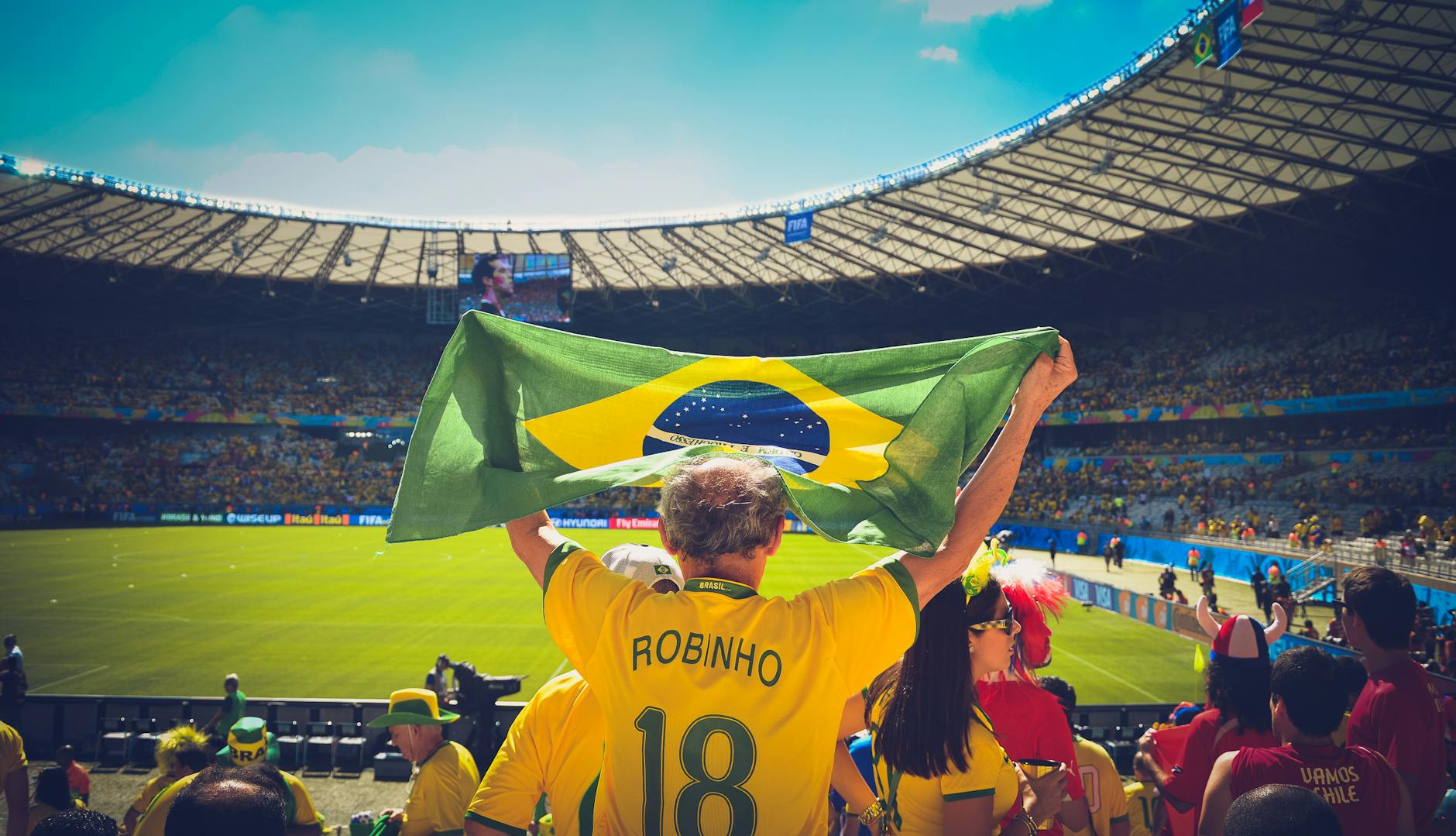
Photo by Caio on Pexels
A particularly overlooked cost is the accumulator tax on attention. Combining six selections at individually reasonable prices does not make the overall ticket reasonable, because one late injury, rotation choice, or red card can destroy the entire position. My own rule after too many spectacular “almost” tickets is ruthless: singles first, correlated combinations only when the relationship is measurable, and never use a parlay to disguise a lack of conviction.
Explore more disciplined preparation with [Internal Link: responsible betting and bankroll management].
Common pitfalls to avoid
The most common 2026 World Cup betting pitfalls are stale information, false certainty, poor market selection, and failure to record results. Avoiding them requires a repeatable checklist rather than another burst of confidence after watching a highlight reel. The Social Science Research Network hosts extensive research on decision-making and forecasting, reinforcing a basic lesson: calibrated uncertainty is more useful than dramatic certainty.
Start with these safeguards:
- Do not rely on old player narratives. A striker’s reputation from 2022 may not reflect 2026 fitness, role, minutes, or club performance.
- Do not treat injuries as binary. A player can be available but limited, especially after muscle problems or a compressed schedule.
- Do not confuse possession with control. Field position, box entries, transition defense, and shot quality reveal more.
- Do not ignore referee tendencies. Card and foul markets can shift when referee appointments are confirmed.
- Do not chase closing-line movement. A shorter price is not automatically a better prediction.
- Do not use social sentiment as evidence. Popularity measures attention, not expected value.
- Do not omit the reason for a wager. If you cannot write the edge in one sentence, you probably do not understand it.
One useful operational test is the “late-news audit.” Recheck the starting lineup, goalkeeper, formation, weather, venue, and travel schedule 60–75 minutes before kickoff, then compare those facts with the original forecast. If your estimated probability changes by more than five percentage points, recalculate the stake or cancel the wager. That threshold is not a universal law; it is a practical brake designed to stop you from defending yesterday’s opinion against today’s evidence.

Photo by Daniel Andraski on Pexels
“Responsible gambling is about keeping gambling fun and within your means,” states the UK Gambling Commission. The principle applies regardless of whether the wager is placed in London, Los Angeles, Toronto, or elsewhere. Check jurisdiction-specific rules before participating, use licensed operators where legal, and remember that a prediction website cannot remove the inherent variance of football.
The 30-day check-in
A 30-day review should measure decision quality, closing-line performance, stake discipline, and market-specific results rather than simply asking whether the last ticket won. Record every selection with kickoff time, odds taken, closing odds, estimated probability, actual result, tactical thesis, and any late information. After 30 wagers, calculate return on investment, yield, hit rate, average odds, and maximum drawdown; after 100 or more, the sample becomes more informative, though never perfectly conclusive.
The check-in should answer five uncomfortable questions:
- Did your chosen market outperform your other markets?
- Were your probability estimates systematically too high or too low?
- Did late lineup news improve or weaken your decisions?
- Did live betting produce measurable value after worse prices?
- Were stakes consistent with your written bankroll rules?
A strong contrarian conclusion often emerges here: the best improvement may be betting less. If your results show that player props lose value after accounting for limits and information speed, eliminating them can improve the overall portfolio even if they are the most entertaining markets. Likewise, if famous teams generate poor prices but smaller national teams offer clearer tactical edges, follow the data instead of your shirt collection. Football fandom can remain passionate; your staking plan should remain boring.
Pitch Notes is built for supporters who want daily 2026 World Cup match predictions, team tactics, player stats, and tournament coverage in one place. Use those insights to build a hypothesis, not to outsource responsibility. The final decision should always account for legal eligibility, personal finances, and the possibility that your carefully researched match simply behaves like football.
Ready to make your next 2026 World Cup review more systematic?
Frequently Asked Questions
Q: What are the biggest 2026 World Cup betting mistakes?
A: The biggest mistakes are backing famous teams without checking odds, ignoring tactical matchups, chasing live losses, trusting outdated player reputations, and risking too much bankroll. The 2026 tournament’s 48-team format and North American geography create additional uncertainty through varied opposition, travel, rest periods, and venue conditions. A pre-match checklist should include lineups, tactical roles, implied probability, travel, weather, and a fixed stake limit.
Q: How can I analyze a 2026 World Cup match before betting?
A: Analyze the matchup by combining market odds, team news, tactical structure, player availability, recent performance quality, and tournament context. Convert decimal odds into implied probability, then compare that figure with your own estimate rather than asking which team feels stronger. Recheck confirmed lineups 60–75 minutes before kickoff, especially the goalkeeper, central midfield, striker, and formation.
Q: What is the difference between FIFA rankings and betting probabilities?
A: FIFA rankings measure international team performance through a ranking system, while betting probabilities represent market expectations and include bookmaker margin. A highly ranked team can still be overpriced if its opponent’s style creates a difficult matchup or if key players are unavailable. Compare FIFA rankings with Elo ratings, expected-goal data, lineup news, and current odds instead of using any single measure as a prediction.
Q: Is live betting worth it during the 2026 World Cup?
A: Live betting is worth considering only when you can interpret match data faster or more accurately than the market and follow predefined rules. Watch shot quality, box entries, field position, cards, substitutions, and tactical changes rather than reacting only to the score. Because live prices update rapidly, use smaller stakes, avoid chasing losses, and skip the market when event information is delayed or unclear.
Q: How much should I risk on a World Cup bet?
A: A cautious recreational bettor may risk 0.5% to 2% of available bankroll on a standard wager, with lower stakes for volatile props and accumulators. The correct amount depends on legal conditions, personal finances, confidence in the probability estimate, and tolerance for losing streaks. Never borrow money, use essential expenses, or increase stakes to recover losses; set daily and tournament-level limits before kickoff.
Q: Why did my World Cup prediction fail even when the analysis was sound?
A: A sound prediction can fail because football outcomes contain substantial variance from finishing, goalkeeping, deflections, penalties, injuries, and red cards. Review whether the tactical thesis was correct, whether the odds offered value, and whether late information changed the probability before judging the decision. A losing bet is not automatically bad analysis, while a winning bet is not automatically proof that the process was good.
Q: What should I do if World Cup betting becomes difficult to control?
A: Stop betting immediately, block access where possible, and contact a local gambling-support service or licensed health professional. In the United States, the National Council on Problem Gambling offers confidential resources, while other countries provide their own helplines and self-exclusion systems. Do not attempt to recover losses through larger wagers; remove payment access, tell someone you trust, and treat the issue as a health and financial priority.
That is the whole battle plan: evidence first, odds second, emotion last. Pitch Notes can sharpen your football reading, but no analyst, model, or World Cup prediction can guarantee a result. Bet only where lawful, stay within your means, and protect the bankroll you worked hard to build.
Want more data-led 2026 World Cup coverage?
End of briefing.
Pitch Notes · Intelligence Division · High-Stakes Analysis