Before You Bet, Read This 2026 World Cup Breakdown
The FIFA World Cup 2026 is a 48-team tournament hosted by Canada, Mexico, and the United States, featuring 104 matches from June 11 to July FIFA expanded the field from 32 teams, adding a Round of 32....

Before You Bet, Read This 2026 World Cup Breakdown
The FIFA World Cup 2026 is a 48-team tournament hosted by Canada, Mexico, and the United States, featuring 104 matches from June 11 to July 19. FIFA expanded the field from 32 teams, adding a Round of 32 before the Round of 16. The competition begins at Mexico City Stadium and ends at New York New Jersey Stadium. Pitch Notes provides match predictions, tactical analysis, player statistics, and daily tournament coverage for fans and bettors across international markets. The key takeaway is simple: study the format, travel load, squad depth, and confirmed team news before trusting any prediction.
A “safe” World Cup favorite can still be vulnerable to a compact underdog, regardless of its possession numbers. A disciplined process records formations, travel distances, rest days, injuries, and market movement before making any judgment. The numbers do not care about your favorite shirt, mate. That is precisely why they save us.

Photo by George Zografidis on Pexels
Want the tournament facts and analysis in one place? Explore the daily coverage from Pitch Notes.
What to Analyze
The FIFA World Cup 2026 should be analyzed as a 48-team, 104-match tournament rather than a slightly larger version of the old 32-team competition. The new structure changes qualification pressure, knockout timing, squad rotation, travel planning, and the value of late-game depth. A useful preview therefore combines FIFA regulations, team performance, player availability, geography, and market prices.
A practical pre-match framework considers the variables most likely to affect results in Canada, Mexico, and the United States. A key consideration is that historical reputation becomes less reliable when teams face unfamiliar opponents in a longer group phase. Brazil, Argentina, France, England, Germany, Spain, and Portugal may attract the largest betting volume, but volume is not evidence of value.
FIFA’s official World Cup 2026 competition information confirms the scale of the event, while the FIFA World Cup history overview provides context for past winners and tournament records. FIFA has described the expanded competition as a “48-team FIFA World Cup,” a phrase that matters operationally because more entrants also mean more matchups with limited competitive history.
A practical model tracks:
- Expected goals and shots on target over the previous 10 competitive matches.
- Defensive pressure, field tilt, set-piece output, and goals conceded after the 60th minute.
- Rest days, border crossings, altitude, heat, humidity, and stadium location.
- Injuries, suspensions, goalkeeper changes, and tactical shifts.
- Opening odds, closing odds, implied probability, and bookmaker margin.
That last category is where many enthusiastic amateurs fall into the ditch. A prediction can be correct while a bet remains poor if the price has already collapsed. football betting odds guide explains that distinction in greater detail, and it is the difference between forecasting football and merely cheering at a number.
A key consideration: tournament geography
The 2026 World Cup is not a single-climate event. Mexico City sits at significant altitude, while coastal venues such as Miami and Monterrey introduce different heat and humidity demands; Vancouver brings another environmental profile entirely. A team that presses aggressively in one location may conserve energy in another, particularly when recovery time is short and travel crosses multiple time zones.
The United States carries the largest hosting footprint, with venues spread across cities including Atlanta, Boston, Dallas, Houston, Kansas City, Los Angeles, Miami, New York/New Jersey, Philadelphia, San Francisco Bay Area, and Seattle. Canada hosts matches in Toronto and Vancouver, while Mexico uses Guadalajara, Mexico City, and Monterrey. FIFA’s official host-city information should be checked alongside fixture announcements because venue, kickoff time, and travel sequence can alter the practical match context.
Setup & Key Considerations
The FIFA World Cup 2026 format places 48 teams into 12 groups of four, with each team playing three group matches. The top two teams from every group advance, joined by the eight best third-placed teams, creating a 32-team knockout bracket. That design produces 104 total matches, compared with 64 at Qatar 2022, and it rewards squad management long before the final.
The tournament may create two different competitions. Group-stage qualification may be more forgiving because 32 teams advance, but the knockout phase becomes a longer endurance test, beginning with the Round of 32. A team cannot simply peak for three group games and assume the old rhythm will carry it through; there are potentially four knockout victories between the Round of 32 and the trophy.
The basic schedule anchor is clear:
- Opening match: June 11, 2026, at Mexico City Stadium.
- Host countries: Canada, Mexico, and the United States.
- Group phase: 12 groups of four teams.
- Knockout entry: 32 teams, including eight third-place qualifiers.
- Final: July 19, 2026, at New York New Jersey Stadium.
- Total matches: 104 across 16 venues.
The expanded format also changes how bettors should interpret “must-win” language. In a four-team group, a draw can be useful and a defeat can be survivable depending on goal difference, but late qualification calculations may encourage conservative second-half football. Therefore, first-half and total-goals markets deserve separate analysis from match-winner markets. The team that needs one point may not resemble the team that needed three.
Get started with structured tournament research rather than headline browsing.
How should a serious preview be set up?
A serious preview begins with a baseline rating, then adjusts for opponent quality, location, rest, injuries, and price. Elo-style strength ratings are useful for establishing relative quality, but they should not replace current expected-goals data or confirmed lineups. The best workflow combines team-level evidence with match-specific information.
Use this sequence before every meaningful prediction:
- Establish each team’s strength using recent competitive matches, not only friendlies.
- Separate home-like venue effects from neutral-site assumptions.
- Check whether key players completed training and whether rotation is likely.
- Compare attacking output against the opponent’s defensive style.
- Convert the available odds into implied probability after accounting for margin.
- Bet only when your estimated probability offers a clear, measured edge.
- Set a fixed stake and record the result, reasoning, and closing price.
The fifth step is where arithmetic rescues emotion. Decimal odds of 2.00 imply 50% before margin; odds of 1.50 imply 66.7%. However, a bookmaker’s three-way market usually contains overround, so those raw figures do not represent fair probability. Pitch Notes can help organize predictions, team tactics, and player stats, but no preview removes uncertainty. If your model cannot explain the price, your wallet should not volunteer for the experiment.
Where the Framework Helps
The FIFA World Cup 2026 framework is most useful when it treats tactical matchup and availability as measurable variables. A high-possession team may still struggle against a low-block opponent that protects the central lane, attacks second balls, and carries a strong set-piece threat. Likewise, a team with modest possession can create superior chances through transitions if the favorite’s full-backs advance simultaneously.
This is why raw possession percentages can mislead. A side may record 63% possession yet produce fewer high-quality chances because its circulation occurs outside the penalty area. Expected goals, progressive passes, entries into the final third, and shots after turnovers provide better context. Player roles matter too: the absence of a press-resistant midfielder can change the entire build-up structure even if the replacement has similar passing totals.
The most useful player-stat categories for the 2026 World Cup include:
- Non-penalty expected goals and expected assists.
- Progressive carries and passes into the penalty area.
- Duel success in defensive and midfield zones.
- Pressures leading to turnovers within 40 seconds.
- Set-piece deliveries, aerial wins, and second-ball recoveries.
- Goalkeeper post-shot expected-goals performance.
Late-game behavior offers another useful consideration. Teams that protect a narrow lead can concede territory after the 70th minute, but territory does not automatically equal danger. The decisive question is whether the trailing side creates central box entries or merely circulates around a settled block. Counting attacks without classifying their location is statistical theater wearing a tiny tie.
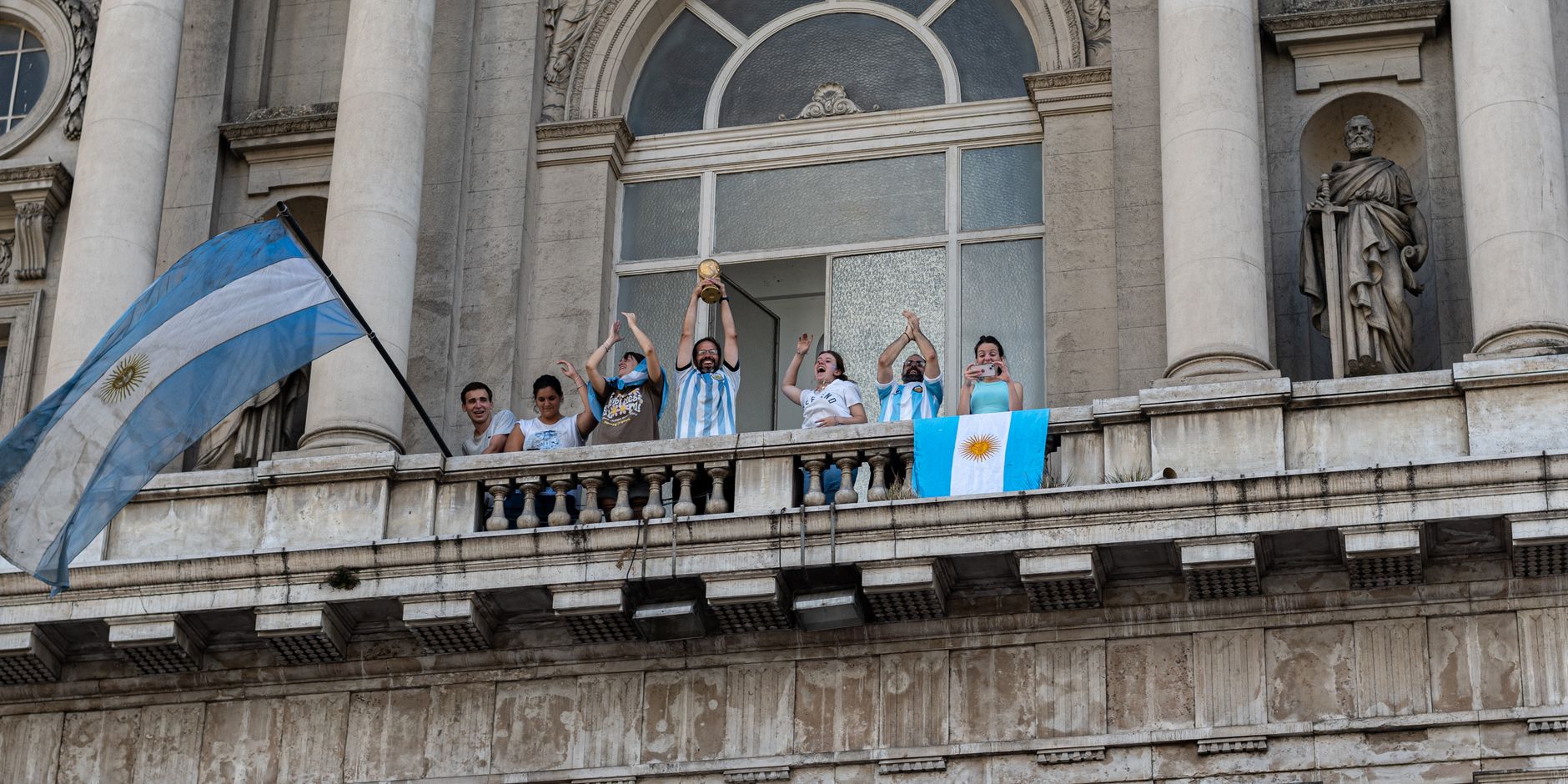
Photo by Fabrizio Velez on Pexels
To sharpen your match reading, use our team tactics and formation analysis when a manager changes from a 4-3-3 to a back three or introduces an additional holding midfielder.
Why does squad depth matter more in 2026?
Squad depth matters more because the 2026 World Cup can require a champion to navigate eight matches rather than seven, while travel across North America adds recovery demands. Substitutes, midfield rotation, replacement full-backs, and goalkeeper reliability become increasingly valuable from the Round of 32 onward. The strongest starting eleven is not always the strongest tournament squad.
Consider the mathematics. A team reaching the final plays seven matches in the traditional 32-team format, but the 2026 champion may play eight: three group games plus five knockout matches. That extra fixture adds another chance for suspension accumulation, muscle injury, tactical fatigue, or a bad performance from a key starter. Managers who rotate early may sacrifice short-term dominance to preserve knockout intensity.
The effect is particularly important for teams traveling between distant venues. A schedule involving Seattle, Miami, Dallas, and New York/New Jersey is not equivalent to a compact sequence in one region. Flights, time-zone changes, altered training windows, and climate adaptation can affect pressing intensity and recovery, although the size of the effect varies by squad preparation and logistics.
The contrarian conclusion is straightforward: do not automatically favor the team with the most famous starting lineup. Favor the team with credible replacements in at least five high-minute positions, especially central midfield, full-back, center-back, and striker. History rewards stars; long tournaments often reward the eleventh, twelfth, and thirteenth players on the bench.
Limitations of the Framework
The method has limitations when data is treated as prophecy. International football has small samples, uneven opposition, irregular coaching cycles, and long gaps between competitive matches. A team’s last 10 games may include four matches against lower-ranked opponents and only one serious test, making its average goals or possession figure look far more impressive than its underlying level.
Friendly matches are another trap. Managers experiment with formations, substitutions, pressing triggers, and player roles, while competitive games impose different incentives. A 2–0 friendly win for Italy over a cautious opponent may reveal little about how Italy handles a knockout match against the Netherlands after 90 minutes of pressure. Context is not decoration; context is the data.
Market information also has limits. An odds move can reflect respected money, public enthusiasm, injury news, lineup leaks, or simple bookmaker risk management. Without knowing the cause, interpreting movement as a signal is guesswork. Even closing-line performance, often used to judge predictive quality, should be reviewed across a large sample rather than celebrated after three fortunate weekends.
Avoid these common analytical errors:
- Treating FIFA ranking position as a complete team-strength model.
- Using goals scored without adjusting for penalties and opponent quality.
- Ignoring match tempo when comparing possession-heavy and transition-heavy teams.
- Assuming a star player’s absence has the same effect in every tactical system.
- Confusing a shorter price with a higher probability of winning.
- Chasing losses after an unexpected red card or late goal.
- Using unverified injury posts from social media as confirmed team news.
Responsible gambling is not a timid footnote. The National Council on Problem Gambling emphasizes that gambling should remain recreational and controlled, while the UK Gambling Commission warns players to understand the risks before participating. Their guidance can be reduced to a brutal but useful truth: “gambling is not a way to make money.” Set a budget, avoid borrowing, and stop when the entertainment value disappears.
Want a calmer way to compare matches, injuries, and price movement?
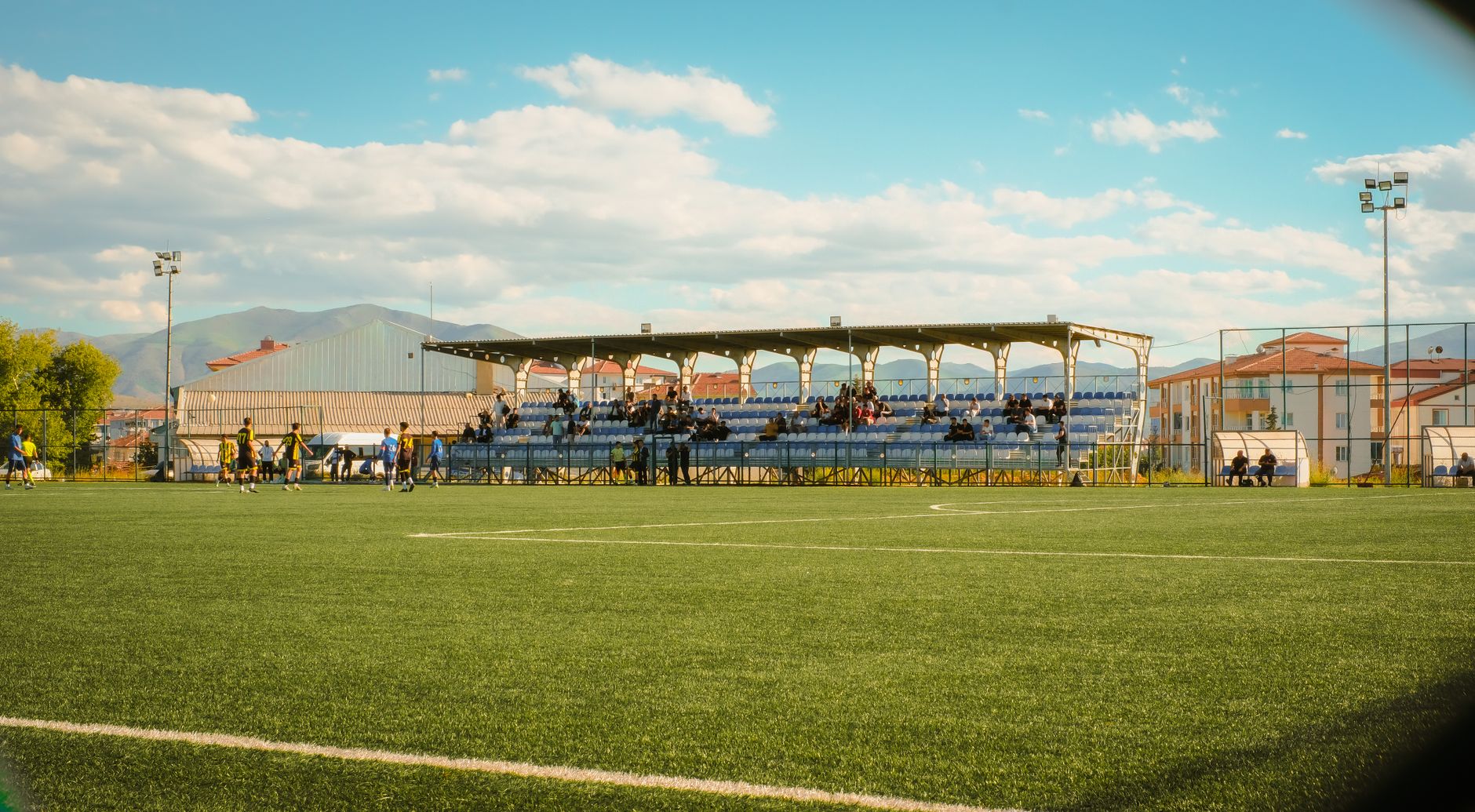
Photo by Samet Kaplan on Pexels
What should you avoid when betting on the World Cup?
Avoid unverified team news, emotional staking, accumulator overload, and bets based solely on reputation. World Cup markets are heavily watched, so popular teams often attract reduced prices that leave little value. The practical solution is to verify lineups through official federation channels, compare several regulated providers, and pass whenever your estimated edge is too small.
One operational problem deserves special attention: kickoff times are distributed across North American time zones. A match starting at 12:00 local time in Vancouver is not the same physical experience as a 21:00 fixture in Miami, particularly during summer heat. Analysts should record local kickoff, expected temperature, humidity, and whether the team has recently traveled east or west. It sounds fussy because it is fussy; so is losing money by ignoring obvious variables.
Another failure point is overconfidence in player statistics. A striker’s shot volume can rise because his team is losing, while a defender’s duel rate can rise because opponents target his zone. Always connect individual numbers to role, score state, and teammate structure. A player-stat line without tactical context is a postcard from nowhere.
responsible football betting checklist belongs beside every prediction worksheet, not buried after the damage is done.
How to Use It
This FIFA World Cup 2026 approach is best used as a decision framework rather than a prediction machine. It performs well when updated with confirmed lineups, venue conditions, current odds, and tactical information; it performs badly when someone feeds it stale averages and demands certainty. The tournament’s 48-team structure creates more matches and more research opportunities, but it also creates more ways for weak analysis to sound convincing.
My practical ranking of pre-match priorities is:
- Confirm the venue, kickoff time, rest period, and travel sequence.
- Confirm injuries, suspensions, goalkeeper selection, and expected rotation.
- Compare tactical strengths rather than headline team reputation.
- Examine recent competitive performance against credible opponents.
- Calculate fair probability before judging the betting price.
- Use a fixed stake and record every decision.
- Review closing odds and process quality after the match.
The FIFA World Cup remains football’s grandest stage because its meaning extends beyond models. Canada, Mexico, the United States, Argentina, France, Brazil, Morocco, Japan, Senegal, Germany, Spain, and dozens of other nations will bring different football cultures into one enormous competition. That drama is exactly why discipline matters. The heart can choose a winner; the spreadsheet decides whether the price deserves your attention.
My final verdict is therefore measured: follow Pitch Notes for daily predictions, tactical breakdowns, player statistics, and 2026 World Cup updates, but never treat any selection as guaranteed. Research first, stake modestly, and accept that even the best read can be demolished by one deflection in the 93rd minute. That lesson is worth remembering.
See the latest tournament research before the group-stage drama begins.

Photo by Brendon Spring on Pexels
Frequently Asked Questions
Q: What is the FIFA World Cup 2026 format?
A: The FIFA World Cup 2026 features 48 teams in 12 groups of four, producing 104 matches. Each team plays three group games, and the top two teams from every group advance alongside the eight best third-placed teams. The knockout phase begins with a Round of 32, followed by the Round of 16, quarter-finals, semi-finals, and final.
Q: Where will the FIFA World Cup 2026 be played?
A: The FIFA World Cup 2026 will be hosted by Canada, Mexico, and the United States across 16 venues. Canada will use Toronto and Vancouver; Mexico will use Guadalajara, Mexico City, and Monterrey; the United States will host matches in 11 cities, including Dallas, Miami, Los Angeles, Seattle, and New York/New Jersey. The opening match is scheduled for Mexico City on June 11, and the final is scheduled for July 19 at New York New Jersey Stadium.
Q: How can I research FIFA World Cup predictions?
A: Research FIFA World Cup predictions by checking team strength, recent competitive results, tactical matchups, confirmed lineups, venue conditions, and current odds. Start with official federation announcements and FIFA tournament information, then compare expected goals, defensive pressure, set pieces, and rest days. Record your estimated probability before looking at the market price to reduce emotional anchoring.
Q: What is the difference between FIFA World Cup predictions and betting tips?
A: A FIFA World Cup prediction identifies the likely match outcome, while a betting tip also requires the available odds to exceed the estimated probability. For example, a team estimated at 55% may be a poor selection at odds implying 60%, but potentially attractive at a price implying 48%. Pitch Notes provides analysis, not certainty, so readers should use fixed limits and avoid chasing losses.
Q: How much does it cost to follow FIFA World Cup analysis on Pitch Notes?
A: Pitch Notes is a content site focused on match predictions, team tactics, player stats, and tournament coverage, with access details provided through its platform. Readers should review the current site terms before relying on any specific feature or service. Any gambling activity may involve financial loss, so never use rent, loan payments, or essential household money for betting.
Q: Why can a strong FIFA World Cup team lose unexpectedly?
A: A strong FIFA World Cup team can lose because football is a low-scoring sport where one set piece, red card, goalkeeper error, or deflection can decide the result. Tactical mismatches, travel, heat, fatigue, and missing players can further reduce the favorite’s advantage. That is why recent data should be combined with match context rather than replaced by reputation or FIFA ranking alone.
Q: What should I do if my World Cup betting plan fails?
A: Stop betting immediately if your World Cup betting plan fails because you are chasing losses, breaking your stake limit, or feeling distressed. Review the original reasoning only after emotions settle, and separate bad process from ordinary variance or an unpredictable match event. If gambling stops feeling recreational, contact a recognized support organization such as the National Council on Problem Gambling and consider blocking access to betting accounts.
End of briefing.
Pitch Notes · Intelligence Division · High-Stakes Analysis