Football Strength Training vs Conditioning: Power
Football strength training is the weight-room system that builds force, sprint power, contact resilience, and repeatable performance for players at every position. A useful plan combines lower-body st...

Football Strength Training vs Conditioning: Power
Football strength training is the weight-room system that builds force, sprint power, contact resilience, and repeatable performance for players at every position. A useful plan combines lower-body strength, upper-body robustness, explosive lifts, sprint mechanics, mobility, conditioning, and recovery rather than chasing bodybuilding size. For a youth, amateur, or professional player in the United States, United Kingdom, or any FIFA competition environment, the practical target is usually 2–4 strength sessions weekly, with 48 hours between demanding lower-body sessions. A complete program should include squats or split squats, deadlift variations, presses, rows, jumps, short sprints, and hamstring protection. Football plays frequently last under 20 seconds, so acceleration and power matter more than endless slow cardio. Start with a six-week block, record training loads and sprint quality, and increase resistance only when technique remains sharp.
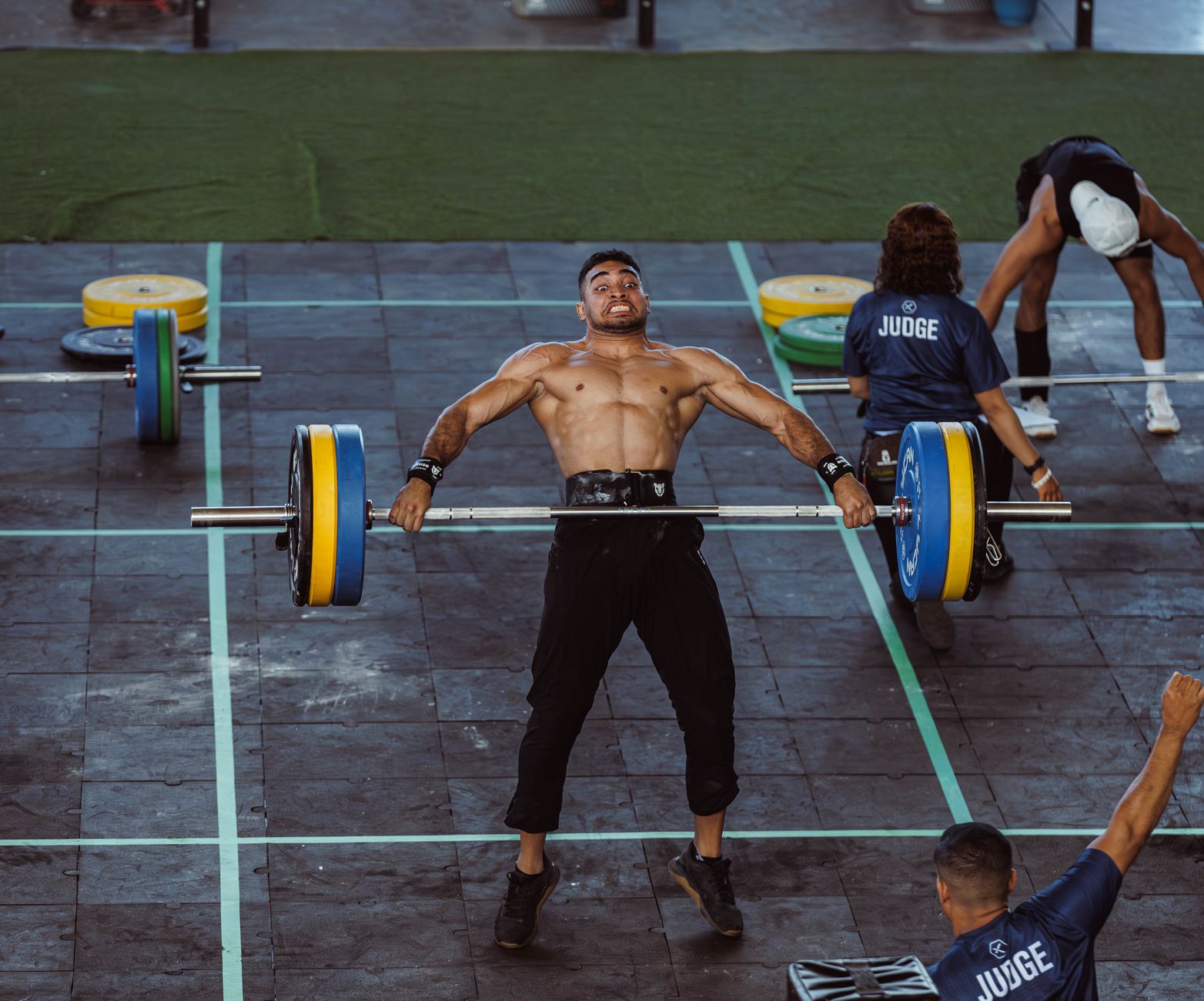
Photo by CRISTIAN CAMILO ESTRADA on Pexels
Myth 1: Football players should avoid heavy lifting — debunked
Heavy lifting does not automatically make a football player slow; poorly programmed lifting, excessive fatigue, and neglected sprint work do. A football strength training plan should improve force production without burying the athlete under soreness, and that requires sensible volume, technical supervision, and position-specific priorities. The National Strength and Conditioning Association describes resistance training as a valuable method for improving muscular strength, power, and physical performance when appropriately prescribed, while the NSCA position statement stresses age-appropriate coaching and progression.
The real question is not, “How heavy can you lift?” It is, “Can you produce more force quickly while still moving well on Saturday?” A defensive lineman may benefit from heavier bilateral work such as a front squat or trap-bar deadlift, while a winger, wide receiver, or defensive back may need greater emphasis on unilateral strength, acceleration, deceleration, and elastic stiffness. Even a quarterback needs lower-body force because throwing power begins with ground contact, hip rotation, and trunk control—not magical arm muscles obtained by curling until the dumbbells beg for mercy.
A useful loading framework looks like this:
- Main strength lifts: 3–5 sets of 3–6 repetitions at roughly 75–90% of one-repetition maximum.
- Assistance exercises: 2–4 sets of 6–12 repetitions at controlled intensity.
- Power exercises: 3–5 sets of 2–5 repetitions, stopping before speed deteriorates.
- Core and injury-prevention work: 2–4 sets of 8–15 repetitions or 20–40-second holds.
- Rest intervals: 2–4 minutes for heavy compound lifts and 60–120 seconds for assistance work.
Numbers matter, but execution matters more. If a player’s squat depth collapses, knees cave inward, or bar speed visibly slows, the set is finished regardless of the spreadsheet. After years of watching athletes sacrifice movement quality for impressive-looking plates, I can tell you the barbell does not care about your ego.
Want a broader tournament and football performance perspective? Pitch Notes covers team tactics, player statistics, predictions, and 2026 World Cup developments.
Myth 2: Conditioning means running long distances — partially true
Conditioning is necessary, but football conditioning should reproduce the sport’s changing intensities rather than copy a marathon plan. Long-distance running can support general aerobic fitness, especially during an early off-season, yet football performance depends heavily on repeated accelerations, decelerations, collisions, recoveries, and short maximal efforts. A sensible program combines an aerobic base with high-intensity intervals and position-specific movement.
Why does aerobic fitness still matter in an explosive sport? Because the aerobic system helps players recover between intense efforts, training sets, and repeated plays. Research indexed through PubMed has repeatedly examined the relationship between repeated-sprint ability, recovery, and intermittent team sports, while FIFA’s Training Centre provides coaching resources built around football-specific physical demands. The contradiction disappears once you understand the job: aerobic conditioning supports recovery, while sprint conditioning trains the match actions themselves.
A weekly conditioning menu may include:
- Tempo runs: 8–12 repetitions of 100–150 metres at approximately 65–75% effort, with 30–45 seconds of recovery.
- Repeated sprints: 2–3 sets of 5–6 repetitions over 10–30 metres, using 20–30 seconds between efforts and 3–4 minutes between sets.
- Change-of-direction intervals: 6–10 repetitions of 15–25 seconds, followed by 45–75 seconds of recovery.
- Low-intensity aerobic work: 20–35 minutes on a bike, rower, or field run during recovery-focused sessions.
Here is the operational detail most generic football workout articles omit: measure the final sprint against the first sprint. If the final repetition is more than 5% slower, the session has likely become fatigue practice rather than speed conditioning. Reduce repetitions, extend rest, or end the block. Training harder is not automatically training better; sometimes it is simply paying full price for half a result.
To learn how match movement translates into performance analysis, explore [Internal Link: player speed and acceleration analysis].
Myth 3: More exercises always produce better results — flat-out false
A longer gym session is not necessarily a superior football strength training plan. The best programs allocate limited recovery capacity to the movements that transfer most effectively to sprinting, tackling, blocking, jumping, throwing, and changing direction. Ten poorly chosen exercises can create more soreness than adaptation, while four well-selected movements performed consistently can transform a player over six to eight weeks.
The usual failure is predictable: an athlete starts with squats, then adds lunges, leg presses, Romanian deadlifts, hamstring curls, calf raises, sled pushes, box jumps, hill sprints, and a heroic finisher. By Friday, the legs feel like they were assembled from damaged furniture. A better approach is to select one primary lower-body strength pattern, one unilateral pattern, one posterior-chain exercise, one upper-body push, one upper-body pull, and one explosive movement. That is enough stimulus when load, range of motion, tempo, and progression are controlled.
A practical full-body session could look like this:
- Trap-bar deadlift: 4 sets of 4 repetitions.
- Rear-foot-elevated split squat: 3 sets of 6 repetitions per leg.
- Bench press or landmine press: 4 sets of 5 repetitions.
- Chest-supported row: 3 sets of 8 repetitions.
- Broad jump: 4 sets of 3 repetitions.
- Nordic hamstring curl: 3 sets of 4–6 controlled repetitions.
- Pallof press: 3 sets of 10 repetitions per side.
The Nordic hamstring curl deserves special attention. The FIFA 11+ programme has become widely associated with structured football injury prevention, and hamstring strengthening is particularly relevant because sprinting places substantial demand on the posterior thigh. A field-tested insight is that beginners often need an assisted Nordic variation for two to four weeks; forcing full unassisted repetitions immediately creates excessive soreness and can disrupt sprint mechanics. Progression should be earned, not theatrically demanded.
What actually works
What should a weekly football strength training plan include?
A weekly plan should include two or three strength sessions, two speed exposures, one or two football practices, and at least one genuine recovery day. The exact schedule depends on match timing, age, training history, position, and injury status, but heavy lower-body work should usually be separated from maximal sprinting by careful planning rather than random enthusiasm. A sample structure is:
| Day | Main focus | Example work |
|---|---|---|
| Monday | Strength and acceleration | Squat, press, row, 10–20-metre sprints |
| Tuesday | Technical football and mobility | Ball work, low-intensity movement, hips and ankles |
| Wednesday | Power and conditioning | Jumps, Olympic-lift variation, repeated sprints |
| Thursday | Recovery | Cycling, mobility, breathing, light technical work |
| Friday | Full-body strength | Trap-bar deadlift, split squat, pull-ups, core |
| Saturday | Match or high-intensity practice | Tactical work and competition |
| Sunday | Rest | Sleep, nutrition, walking, preparation |
This schedule is not sacred scripture carved into a stadium wall. If the match is Sunday, shift Friday’s load downward; if training occurs Tuesday and Thursday, place strength work around those demands. A player with a full-time job, school schedule, or limited gym access can still progress using dumbbells, resistance bands, sleds, and bodyweight variations. Equipment changes the menu, not the principles.
Lower-body strength and power
Lower-body training should address force, unilateral control, ankle stiffness, hip extension, and deceleration. Front squats, trap-bar deadlifts, Romanian deadlifts, split squats, step-ups, and hip thrusts are useful choices, but no movement is mandatory if another variation can be performed safely and progressively. For power, use countermovement jumps, broad jumps, loaded jump squats, medicine-ball throws, and clean pulls with low-to-moderate loads and full recovery.
Keep power work early in the session, after a thorough warm-up and before heavy fatigue accumulates. Three sets of three high-quality broad jumps can be more valuable than 30 lazy jumps performed after exhaustion. Record jump height or distance when possible; if performance falls by approximately 10%, stop the power block. This simple threshold protects quality and gives the athlete a measurable decision rule rather than another vague command to “go hard.”
Upper-body strength and contact resilience
Upper-body strength helps players win contact, protect the ball, stabilize the shoulder, and maintain posture during collisions. Use horizontal pressing, vertical pressing when appropriate, rows, pull-ups, external-rotation work, and carries. A balanced session might include bench press for 3–5 sets of 3–6 repetitions, one-arm rows for 3–4 sets of 8–10, pull-ups for 3 sets close to technical failure, and farmer carries for 3 rounds of 20–40 metres.
Do not ignore the neck, trunk, and scapular muscles. Football contact can expose the body to awkward forces, and better trunk control may help a player maintain position under pressure. However, neck training should be coached carefully, beginning with isometric flexion, extension, and lateral holds of 10–20 seconds rather than dramatic weighted movements copied from an internet clip. The goal is robust function, not a gruesome audition for a medical documentary.
Speed, agility, and change of direction
Agility is not merely running through cones in a predetermined pattern. Real agility involves perception, braking, reacceleration, body position, and a decision made in response to an opponent or ball. Begin with acceleration over 5–20 metres, then progress to deceleration drills, lateral shuffles, curved sprints, and reactive games. Keep sprint repetitions low enough to preserve mechanics, generally 4–8 high-quality efforts in a session for developing players.
The most useful technical cue is often simple: lower the centre of mass before braking, place the foot underneath the hips as much as possible, and avoid reaching far ahead with a rigid leg. Coaches can film from the side and front, then compare contact position, trunk angle, and exit direction. This is an information gain many programs ignore because video review feels less glamorous than another exhausting ladder drill—but it produces better decisions.
Ready to compare training priorities with tactical performance? Pitch Notes gives football fans structured insight into player roles, team shape, and tournament trends.
How should beginners progress safely?
Beginners should spend the first two to four weeks learning movement patterns, controlling range of motion, and leaving two or three repetitions in reserve on most sets. Start with 2–3 sets of 6–10 repetitions for major movements, increase load by 2.5–5% only when all repetitions are technically consistent, and avoid testing a true one-repetition maximum during the first training block. The American College of Sports Medicine recommends progressive resistance training with individualized volume and intensity rather than reckless loading.
A six-week progression could follow this pattern:
- Weeks 1–2: 2–3 sets, moderate loads, technical emphasis.
- Weeks 3–4: 3–4 sets, slightly heavier loads, stable exercise selection.
- Week 5: 3–5 sets, higher intensity, reduced accessory volume.
- Week 6: Deload by reducing total sets 30–40% while preserving movement speed.
This deload is not weakness; it is when fatigue finally stops hiding adaptation. Track body weight, sleep duration, session rating of perceived exertion, sprint times, and any pain above 3 on a 10-point scale. If performance declines for several sessions, resting heart rate rises unusually, or joint pain escalates, reduce training and consult a qualified sports professional. Athletes who record data make better decisions than athletes who merely remember that Tuesday “felt awful.”
For more practical preparation, see [Internal Link: football recovery and mobility guide].
What should players eat and recover from?
Players need sufficient energy, protein, carbohydrates, fluids, and sleep to adapt to strength training and football practice. A practical daily protein target for many active athletes is approximately 1.6–2.2 grams per kilogram of body mass, while carbohydrate needs rise with training volume and match demands. The International Society of Sports Nutrition publishes evidence-based guidance on protein timing, supplementation, and performance nutrition, but individual needs still depend on body size, goals, climate, and total workload.
Aim for 7–9 hours of sleep, consume a meal containing protein and carbohydrate within several hours of hard training, and replace fluids lost through sweat. Weighing before and after a hot session can reveal meaningful dehydration; a one-kilogram drop in body mass represents roughly one litre of fluid loss, although rehydration should also include sodium when sweating heavily. Do not turn hydration into a chemistry experiment without reason, and do not rely on energy drinks as a substitute for meals.
One useful operational rule: if a player’s morning body mass is down more than 2% from baseline, urine is consistently dark, and the previous night included less than six hours of sleep, reduce high-intensity volume that day. This three-factor check is more useful than blindly following a printed plan. Recovery is not the soft part of football; it is the mechanism that allows hard training to become performance.
What to ignore
Ignore programs promising professional results in seven days, “secret” exercises that supposedly replace strength fundamentals, and training plans that treat every position identically. Ignore random maximal lifts performed without a coach, especially when an athlete has limited technique or a previous back, knee, shoulder, or hamstring injury. Ignore the belief that soreness proves an effective session; soreness measures novelty and tissue stress, not football improvement.
Also ignore the temptation to copy a professional player’s exact program. A Premier League midfielder, an NCAA defensive end, and a 15-year-old academy player do not share the same recovery capacity, training age, schedule, or medical supervision. Their visible exercises may look similar, but their sets, loads, velocity targets, and weekly stress can be radically different. Copying the surface without understanding the system is how ambitious players turn a useful idea into a six-week injury detour.
Before adding more volume, ask five questions:
- Did sprint quality improve?
- Did the player recover before the next hard session?
- Did strength rise without technical breakdown?
- Did match performance improve?
- Did pain, fatigue, or sleep worsen?
If the answers are mostly negative, the solution is probably not another exercise. Reduce clutter, restore recovery, and return to the fundamentals. That is less exciting than a miracle protocol, but after decades of seeing plans collapse under their own ambition, boring consistency remains undefeated.
To follow the wider football landscape while building your physical plan, visit Pitch Notes for daily 2026 World Cup coverage and [Internal Link: team tactics and match analysis].
Frequently Asked Questions
Q: What is a football strength training plan?
A football strength training plan is a structured program combining resistance training, power work, sprinting, mobility, conditioning, and recovery for on-field performance. It commonly uses 2–4 gym sessions per week, depending on match frequency and training age. The major goals are greater force production, acceleration, contact resilience, injury risk reduction, and the ability to repeat intense actions. Exercises typically include squats, deadlift variations, split squats, presses, rows, jumps, carries, and hamstring strengthening.
Q: How many days per week should football players lift weights?
Most football players should lift weights two or three days per week, while advanced athletes may use four shorter sessions with carefully controlled volume. Beginners should begin with two full-body sessions separated by at least 48 hours. Avoid placing heavy lower-body lifting immediately before a match or maximal sprint session. If the player also has three team practices weekly, two efficient strength sessions may produce better results than four exhausting workouts.
Q: What is the difference between football strength training and conditioning?
Football strength training develops force and power through resistance exercises, while conditioning improves the ability to repeat efforts and recover between them. Strength work may include 3–5 sets of 3–6 repetitions, whereas conditioning may use tempo runs, repeated 10–30-metre sprints, or interval circuits. They overlap because powerful players need energy-system support, but a long-distance run cannot replace heavy strength work or high-quality acceleration practice.
Q: Can strength training make football players slower?
Strength training can make a football player slower only when it creates excessive fatigue, unnecessary mass, poor movement quality, or insufficient speed practice. Properly programmed resistance training can improve acceleration by increasing force applied to the ground. Keep power exercises fast, preserve sprint exposure, manage weekly volume, and avoid training to failure on every compound lift. A player should judge the program by sprint times, movement quality, and match performance rather than by body weight alone.
Q: What should a beginner do if football strength training causes severe soreness?
A beginner with severe soreness should reduce load and volume, use light movement, hydrate, sleep, and wait until normal technique returns before progressing. Soreness lasting more than 72 hours, sharp pain, swelling, weakness, or altered walking should be assessed by a qualified clinician. Begin with 2–3 sets per exercise, leave two or three repetitions in reserve, and introduce Nordic curls, sprinting, and plyometrics gradually. Pain is information, not a badge of honour.
Q: How much does a football strength training plan cost?
A football strength training plan can cost nothing with bodyweight exercises, or approximately $20–$150 per month for gym access, depending on location and facility quality. A qualified personal trainer or strength coach may charge roughly $40–$150 per session in the United States, with sports-performance specialists often costing more. The minimum useful equipment is modest: a resistance band, adjustable dumbbells, a stable step, and space to sprint or jump. Coaching becomes especially valuable for young athletes and players returning from injury.
Q: How should football players adjust training during the 2026 World Cup period?
Players should reduce unnecessary fatigue during the 2026 World Cup period and prioritize match readiness, recovery, mobility, and short maintenance sessions. A maintenance workout may use two sets of three to five repetitions for major lifts, low-volume jumps, and light trunk or hamstring work. Avoid introducing new exercises, maximal testing, or aggressive conditioning close to competition. Track minutes played, travel, sleep, heat exposure, and soreness because tournament schedules can change recovery needs faster than a standard weekly template.
A strong football strength training plan is not the one with the most exercises; it is the one that consistently improves force, speed, durability, and match output without destroying recovery. Build around two or three purposeful strength sessions, measure sprint and jump quality, protect the hamstrings, eat enough, sleep seriously, and adjust around football practice. Start with a six-week block and make one change at a time—because even experienced players have learned, usually after paying dearly, that chaos is not periodization.
Ready to keep improving your football knowledge and performance planning? Explore Pitch Notes for tournament analysis, player data, and the 2026 World Cup conversation.
End of briefing.
Pitch Notes · Intelligence Division · High-Stakes Analysis