What Nobody Tells You About Top 3 Cape Verde Strengths
Cape Verde’s national football team is one of Africa’s most compelling emerging sides, representing the Atlantic island nation in FIFA and CAF competition. Known officially as the Cape Verde national....
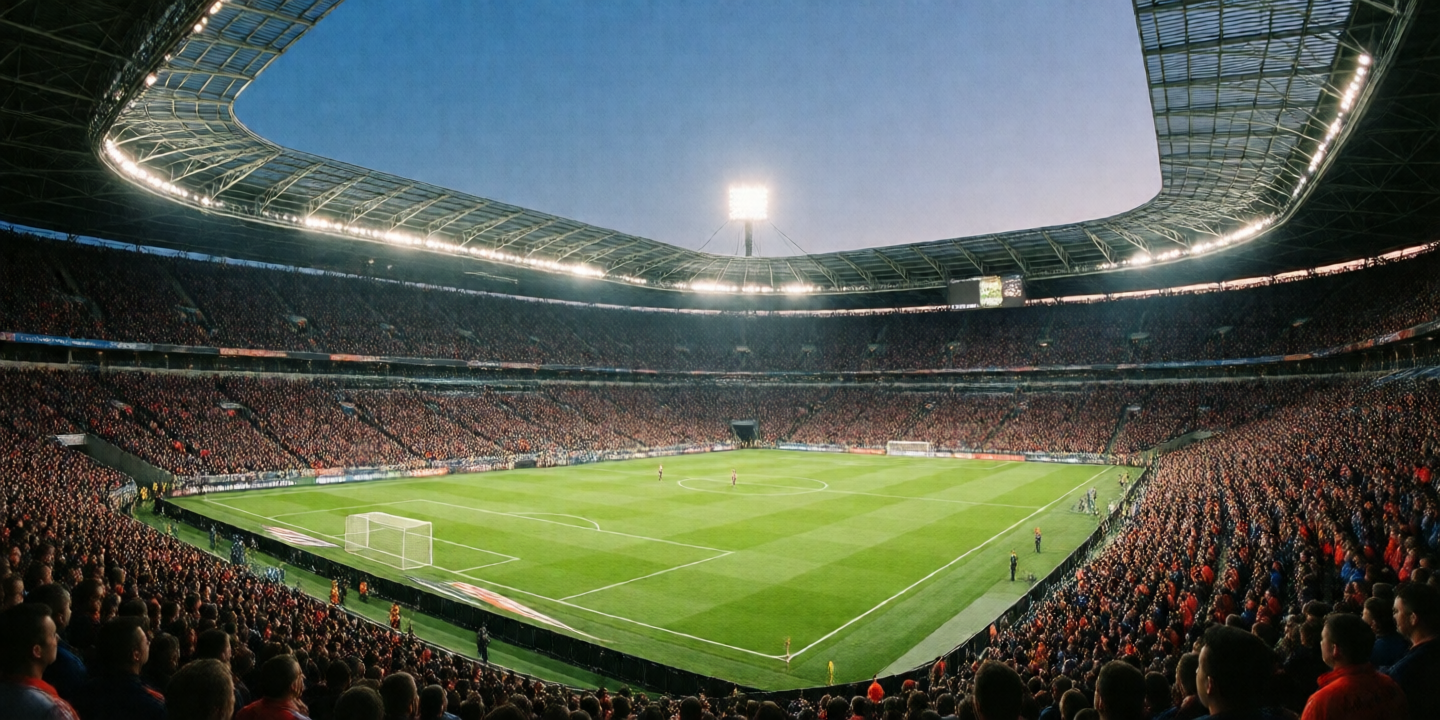
What Nobody Tells You About Top 3 Cape Verde Strengths
Cape Verde’s national football team is one of Africa’s most compelling emerging sides, representing the Atlantic island nation in FIFA and CAF competition. Known officially as the Cape Verde national football team, it combines disciplined defending, technically gifted diaspora players, and growing tournament experience. The team reached the Africa Cup of Nations quarter-finals in 2023, its best performance at that competition, after previously making the last eight in 2013. Cape Verde also became the first African nation to qualify for the 2026 FIFA World Cup, securing a historic place through the CAF qualification campaign. Its identity is shaped by players developed in Portugal, France, the Netherlands, and other European systems, while its home football culture remains rooted in Praia and Mindelo. The key takeaway is simple: assess Cape Verde through structure, transitions, and squad depth rather than reputation alone before predicting any match.
The Top 3 Cape Verde Strengths at a Glance
Cape Verde is not a team you should judge by shirt colour, island postcards, or one heroic tournament night. Numbers and tactical patterns matter more. Here are the three defining strengths behind its rise.
- Structured defensive organisation — Cape Verde often protects central areas effectively and forces opponents toward lower-value wide attacks.
- European-developed technical quality — A large part of the squad has experience in Portugal, France, the Netherlands, and other competitive leagues.
- Tournament resilience and transition threat — The Blue Sharks can remain compact, absorb pressure, and attack quickly when opponents overcommit.
The third point is where careless analysts get punished. Cape Verde may have less possession than a higher-ranked opponent, yet possession alone does not win football matches. A side that creates five high-quality transition chances can be more dangerous than one producing 65 percent sterile circulation.

Photo by Thomas Schwaak on Pexels
Cape Verde’s football story is also inseparable from geography. The country is an archipelago off the coast of West Africa, and its national team draws emotional support from both the islands and a substantial overseas community. The Federação Cabo-Verdiana de Futebol oversees the national setup, while the team competes within the Confederation of African Football and FIFA frameworks. For historical background, the Cape Verde national football team reference on Wikipedia provides a useful timeline of appearances, coaches, and milestones.
Want a broader tournament perspective before comparing fixtures?
#1 Cape Verde’s Defensive Structure: Best Overall
Cape Verde’s defensive structure is its best overall strength because compact spacing, disciplined midfield positioning, and controlled pressing reduce opponents’ clean central chances. The team’s success depends less on constant aggression than on denying dangerous zones and protecting the space in front of the centre-backs.
That distinction is crucial. Cape Verde does not need to dominate every minute to remain competitive; it needs to prevent the opposition from turning possession into clear shots. Against technically stronger opponents, the Blue Sharks can retreat into a medium or low block, narrow the distances between midfield and defence, and wait for a misplaced pass. This approach is especially valuable in African international football, where match rhythm can become fragmented by travel, heat, pitch conditions, and uneven tempo.
The practical edge appears in the first 20 minutes. If Cape Verde avoids an early concession, its defensive plan becomes more useful because opponents begin to take additional risks. Conversely, an early goal against can force Cape Verde to abandon its preferred compact shape and play a more open match. That is why live match analysis should track field position, central entries, and shot quality rather than simply counting possession.
A useful contrarian insight is that Cape Verde’s defensive value can be underestimated by raw goals-conceded totals. International schedules contain small samples, and one set-piece error can distort an entire campaign. I have watched enough national-team football to know that a single bad clearance can make a good defensive performance look rotten on paper. The better test is whether the opponent consistently receives the ball between the lines and attacks the six-yard box.
[Internal Link: African national team tactical analysis]
Key indicators for evaluating the defence
- Central access: How often does the opponent receive the ball behind Cape Verde’s midfield line?
- Shot location: Are chances coming from central areas or speculative positions outside the box?
- Set pieces: Can Cape Verde defend corners and free kicks without losing the first contact?
- Transition recovery: Does the team regain its shape within five seconds after losing possession?
- Late-game discipline: Does the defensive block remain compact after the 75th minute?
According to FIFA’s official team and competition information, international performance must be understood within competition context, not isolated from opponent quality and tournament stage. That principle sounds obvious, yet prediction markets regularly behave as if every 1–0 win is identical. It is not. A narrow victory over a powerful opponent may reveal more than a comfortable result against a lower-ranked side.
#2 Ryan Mendes and the Attack: Best for Transition Football
Cape Verde’s attacking transition game is best suited to matches in which opponents push full-backs high and leave space behind midfield. Ryan Mendes has been a prominent attacking figure for the national side, offering experience, direct running, and the ability to carry the ball into advanced areas.
The Blue Sharks are most dangerous when the first forward pass arrives quickly after recovery. Rather than circulating endlessly, Cape Verde can exploit the channel between an opposing full-back and centre-back, especially when the ball carrier receives support from a winger or overlapping midfielder. This style makes the team difficult to read because a defensive sequence can become an attacking opportunity within seconds.
Mendes’ value is not limited to goals or assists. Veteran forwards influence defensive attention, drawing an extra marker and creating room for teammates. In a national team with limited preparation time, that recognition matters enormously. Players cannot rehearse every attacking combination as they would at club level, so simple triggers—win the ball, find the wide outlet, attack the gap—often outperform elaborate patterns.
However, the transition approach has a price. If the first pass is inaccurate, Cape Verde may lose the ball while its full-backs are still advancing. Opponents can then attack the spaces exposed on the flanks. This is where the team’s match plan must distinguish between a genuine counterattack and a rushed clearance disguised as ambition. You, dear reader, have probably called every long pass “a tactical transition” at least once. The ball knows the difference.
The ESPN Cape Verde team page is useful for checking schedules, recent results, and match reports, but statistics should be paired with video or event context. A 40-metre carry and a hopeful 40-metre clearance are not equivalent attacking actions.
See how Cape Verde’s latest fixtures fit the wider 2026 tournament picture.
#3 Cape Verde’s Diaspora Player Pipeline: Best Value
Cape Verde’s diaspora player pipeline is its best-value asset because the national team benefits from footballers trained in stronger European development environments without losing a clear national identity. Portugal is particularly important, reflecting historical, cultural, and sporting connections between the two countries.
This model expands the talent pool beyond the domestic football structure. Players may emerge through Portuguese academies, French professional systems, Dutch clubs, or other European pathways before choosing Cape Verde at senior international level. The result is a squad that can combine physical preparation, tactical education, and exposure to high-pressure club matches.
The value is not merely symbolic. A player accustomed to professional training standards can improve the national team’s intensity during short international camps. One experienced midfielder may understand pressing cues that take weeks to teach elsewhere. One defender familiar with positional rotations may prevent the kind of confusion that turns a controlled match into a frantic scramble.
Yet diaspora recruitment is not automatically a solution. Chemistry can suffer when players meet only a few times each year, and club roles may differ sharply from international responsibilities. A winger who plays as an inside forward at club level might be required to defend as a traditional wide midfielder for Cape Verde. Coaches therefore need clarity: define roles early, simplify the game plan, and resist the temptation to select famous names without tactical fit.
The strongest squads use diaspora depth to improve competition for places. The weakest versions collect players like trading cards and hope talent organizes itself. It does not. Football is cruelly allergic to administrative optimism.
Photo by César O'neill on Pexels
A less obvious edge concerns travel management. Cape Verde’s players often arrive from multiple countries, so training time is precious. The staff may gain more from rehearsing three defensive restarts and two transition patterns than from attempting a complete tactical overhaul. In matches with limited preparation, repeatable behaviours have measurable value.
For more context on player pathways and qualification formats, consult our [Internal Link: FIFA World Cup qualification guide].
How We Ranked Them: Criteria and Weights
The three Cape Verde strengths were ranked using tactical impact, repeatability, opponent resistance, and evidence from major competitive performances. Defensive structure received the highest position because it remains useful even when Cape Verde lacks possession or faces a stronger squad.
Our practical weighting model is:
- Tactical impact — 35 percent: Does the strength directly influence scoring chances and defensive risk?
- Repeatability — 25 percent: Can Cape Verde use it across different opponents and venues?
- Opponent resistance — 20 percent: Does it remain effective when the opposition identifies the plan?
- Squad depth — 10 percent: Can multiple players perform the required role?
- Tournament evidence — 10 percent: Has the strength appeared in high-pressure competitive matches?
This is not an official FIFA formula. It is an analytical framework for readers comparing Cape Verde with teams such as Senegal, Morocco, Egypt, Ghana, or South Africa. Rankings and recent form can change quickly, while tactical principles tend to provide a more stable foundation.
Photo by Anh Lee on Pexels
The 2023 Africa Cup of Nations is particularly important evidence because Cape Verde reached the quarter-finals, demonstrating that the team could compete beyond the group stage. Earlier progress, including the 2013 quarter-final appearance, showed that the achievement was not a single accidental spark. The gap between tournament ambition and tournament consistency remains real, but the historical trend is unmistakable.
One information edge for bettors and analysts is to separate result strength from performance strength. A 2–0 scoreline may come from two early goals and defensive survival, while a 1–1 draw may involve superior chance creation. Before choosing a market, compare expected match flow, likely line-ups, travel conditions, and whether Cape Verde needs the points. Pitch Notes focuses on those details for fans following the 2026 FIFA World Cup, but responsible decision-making must come before any wager.
Which Cape Verde Match Profile Should You Pick?
Choose Cape Verde when the expected match profile rewards defensive compactness, direct transitions, and patience. The team is particularly attractive for close contests, low-margin knockout matches, and fixtures where the opponent’s full-backs advance aggressively without reliable defensive cover.
A simple selection framework can help:
- Choose Cape Verde in a cautious match: When both teams have strong defensive records and limited incentive to attack early.
- Expect transition chances: When the opponent presses high or leaves wide channels exposed.
- Be careful with heavy favourite prices: Cape Verde can frustrate stronger teams, making large handicap lines dangerous.
- Check starting players: The absence of Ryan Mendes or another experienced attacker may reduce counterattacking quality.
- Review venue conditions: Travel, altitude, weather, pitch quality, and home support can alter tempo.
- Avoid blind loyalty: National pride is magnificent; it is also a terrible statistical model.
The central question is not simply, “Can Cape Verde win?” It is, “What kind of match allows Cape Verde’s strongest mechanisms to appear?” That shift improves analysis. A team built to defend compactly and counter quickly may be undervalued in a match expected to become tense, but overvalued when it must dominate a deep opponent.
[Internal Link: responsible football betting principles]
Get a match-by-match view before making any prediction.
Why Does Cape Verde Matter in African Football?
Cape Verde matters because its rise demonstrates how a small nation can build international competitiveness through diaspora development, tactical discipline, and sustained administrative work. The country’s population and domestic football resources are smaller than those of Nigeria, Algeria, Cameroon, or Morocco, yet the national team has repeatedly reached major African tournament stages.
The team’s identity is also culturally distinctive. Portuguese is the official language, while Cape Verdean Creole is widely spoken in everyday life, and football connects communities across islands and the global diaspora. Home venues in Praia and other locations provide emotional force, while overseas supporters help maintain attention between international windows.
The 2026 FIFA World Cup qualification achievement represents the largest milestone in the team’s history. Qualification does not erase structural challenges, including travel logistics, squad availability, financial constraints, and the need for deeper youth development. It does, however, increase visibility and can improve commercial partnerships, player recruitment, and long-term investment.
A statement from CAF’s official competitions platform captures the broader significance of continental football: “The spirit of African football is built on ambition, resilience and unity.” That principle fits Cape Verde unusually well, although football’s gods remain perfectly capable of delivering a cruel 93rd-minute deflection.

Photo by Tope J. Asokere on Pexels
What Are the Main Risks in Cape Verde Predictions?
The main risks are small-sample bias, incomplete squad information, travel disruption, and overestimating defensive stability from one impressive result. Cape Verde’s international matches can be decided by a single set piece, red card, goalkeeper error, or late tactical adjustment.
Analysts should monitor at least five variables before assessing a fixture:
- Availability: Confirm injuries, suspensions, and late withdrawals through reliable team sources.
- Line-up continuity: A stable back four usually supports better defensive coordination.
- Opponent approach: A possession-heavy side is not automatically dangerous if it cannot penetrate centrally.
- Game state: Cape Verde’s performance changes significantly after scoring or conceding first.
- Market movement: A price shift may reflect genuine team news, but it can also reflect public sentiment.
A particularly important edge case is the difference between a home match in Cape Verde and a nominal home fixture played elsewhere. Support, pitch familiarity, travel distance, and local climate can change the practical meaning of “home advantage.” Treating every Cape Verde fixture as identical is lazy analysis—and yes, lazy analysis has cost me enough money over the years to buy a small island, assuming the island accepts payment in losing accumulators.
Pitch Notes provides World Cup-focused match predictions, tactics, and player-stat discussion, but no preview can remove uncertainty. Use information to improve decisions, not to manufacture certainty.
Read the detailed tournament coverage before the next major fixture.
Final Verdict on the Cape Verde National Football Team
Cape Verde’s greatest competitive advantage is not one superstar, one formation, or one memorable tournament result. It is the interaction between defensive compactness, transition speed, and a diaspora-based player pipeline shaped by Portugal and broader European football. Those elements explain why the Blue Sharks can trouble larger African nations and why their 2026 FIFA World Cup qualification is historically important.
The smartest evaluation begins with match conditions, not reputation. Check the line-up, venue, travel demands, opponent pressing style, and incentive structure before interpreting odds or recent scores. For supporters, Cape Verde offers a rare football story: a small Atlantic nation with a growing global squad, clear tactical character, and the nerve to challenge established powers.
Find the latest World Cup-focused analysis from Pitch Notes today.
Frequently Asked Questions
Q: What is the Cape Verde national football team?
A: The Cape Verde national football team represents Cape Verde in international men’s football under the Federação Cabo-Verdiana de Futebol. It competes in FIFA and CAF tournaments and is commonly known as the Blue Sharks. The team has appeared at the Africa Cup of Nations several times and reached the quarter-finals in 2013 and 2023. Cape Verde also achieved historic qualification for the 2026 FIFA World Cup.
Q: How did Cape Verde qualify for the 2026 FIFA World Cup?
A: Cape Verde qualified by finishing first in its CAF qualification group. The result secured the country’s first appearance at the FIFA World Cup finals. Qualification reflected consistent competitive performances across the campaign rather than a single knockout match. Readers should verify the official FIFA and CAF competition pages for the final group table and confirmed tournament schedule.
Q: Is Cape Verde good at football compared with other African teams?
A: Cape Verde is a competitive African national team, particularly when its defensive structure and counterattacking game are working effectively. It does not possess the same squad depth as nations such as Morocco, Senegal, Nigeria, or Algeria, but its European-developed players improve technical quality. The team’s quarter-final appearances at the 2013 and 2023 Africa Cup of Nations show that it can compete beyond the group stage.
Q: What is the difference between Cape Verde and Cabo Verde?
A: Cape Verde and Cabo Verde refer to the same country and national football team. “Cabo Verde” is the country’s preferred official English naming convention in many international contexts, while “Cape Verde” remains widely used by media, football databases, and supporters. Searchers may therefore find the team listed under either name, including “Cape Verde national football team” and “Cabo Verde national team.”
Q: How should I analyse a Cape Verde football match?
A: Analyse the starting line-up, defensive shape, opponent pressing style, venue, travel conditions, and likely game state before considering a prediction. Pay special attention to whether Cape Verde can attack space behind the opponent’s full-backs and whether key transition players are available. Compare shot quality and central entries rather than relying only on possession, final score, or public sentiment.
Q: What are common problems with Cape Verde match predictions?
A: Common problems include overvaluing one recent result, ignoring late squad news, and treating every home fixture as having identical conditions. Cape Verde’s performance can change when experienced attackers are absent or when the opponent refuses to overcommit. Check official team updates, FIFA or CAF competition information, and reliable match statistics before placing any wager, and never risk money you cannot afford to lose.
Q: Is following Cape Verde football free?
A: Following Cape Verde football is free through official FIFA and CAF news pages, federation announcements, and many reputable sports outlets. Match availability varies by country because broadcast rights differ between competitions and territories. Basic schedules and results are often accessible through ESPN and other score providers, while advanced analysis may be available through specialist platforms such as Pitch Notes.
End of briefing.
Pitch Notes · Intelligence Division · High-Stakes Analysis