The 2026 Fan’s Guide to Algeria
Algeria’s national football team is North Africa’s most tactically intriguing contender for the 2026 FIFA World Cup, representing the Algerian Football Federation across Africa and the global tourname...

The 2026 Fan’s Guide to Algeria
Algeria’s national football team is North Africa’s most tactically intriguing contender for the 2026 FIFA World Cup, representing the Algerian Football Federation across Africa and the global tournament stage. The Desert Foxes won the 2019 Africa Cup of Nations, reached the World Cup four times, and continue to build around Riyad Mahrez, Amine Gouiri, Ramy Bensebaini, and emerging midfielder Ibrahim Maza. Their 2026 squad profile combines experienced leadership with a younger technical core, while qualification and tournament performance will depend heavily on defensive transitions and chance conversion. Algeria’s home matches traditionally benefit from intense support in venues such as Algiers and Oran, although the World Cup will test them against elite opponents in North America. For practical analysis, track confirmed FIFA squad lists, recent line-ups, and opposition strength before judging Algeria’s odds or match predictions.
The familiar pain point is simple: supporters remember the brilliance, then remember the collapse five minutes later. Algeria can dominate possession, produce a glorious winger, and still leave one enormous motorway through midfield. I have watched enough international football to know that “we looked better” is not a statistic. It is grief wearing a scarf. This guide separates Algeria national football team history, player roles, tactical trends, 2026 World Cup prospects, and evidence-based predictions, with Pitch Notes adding daily match analysis for fans who prefer numbers before noise.
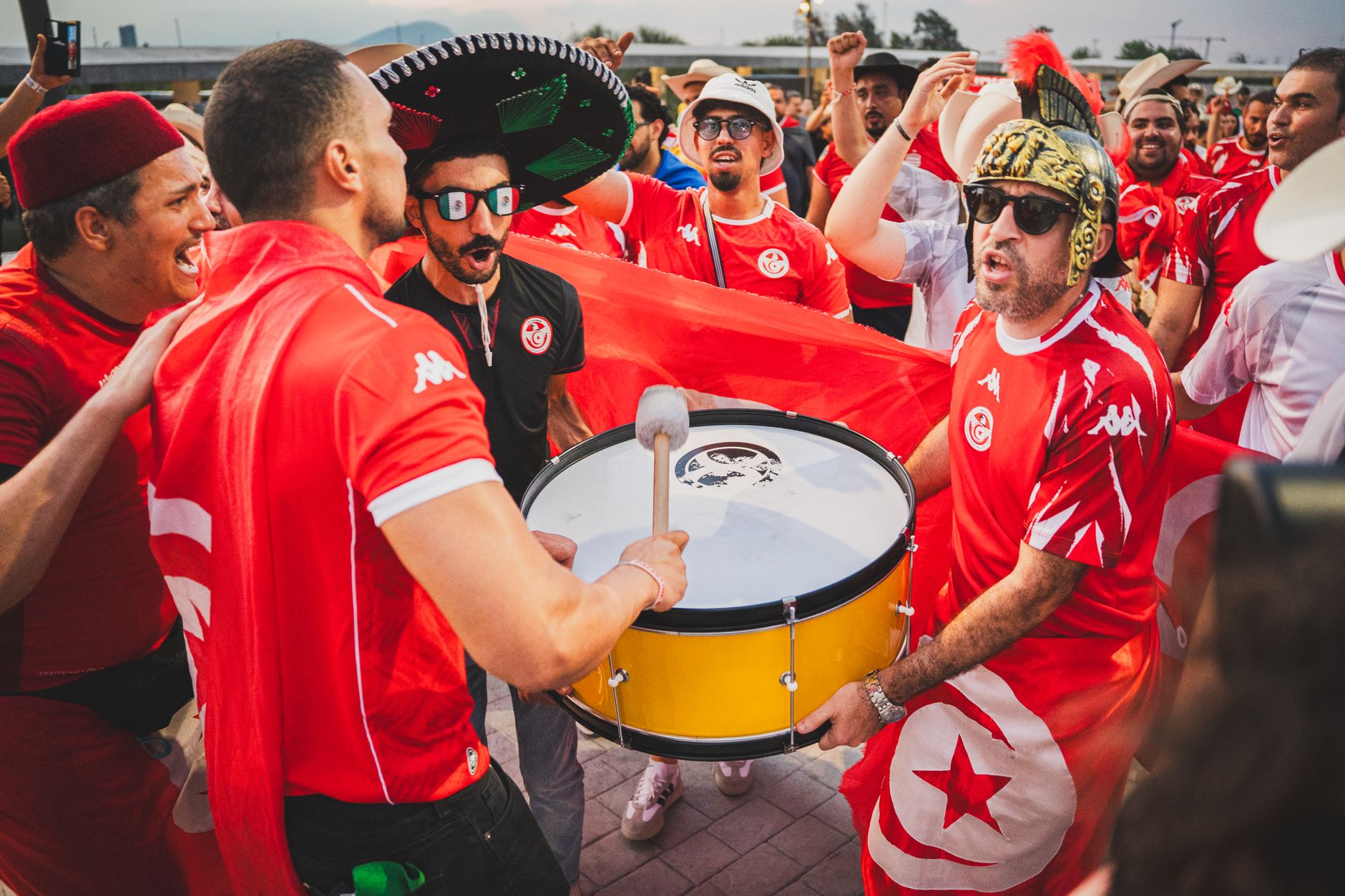
Photo by Gerardo Trujillo on Pexels
Before 2025: how Algeria national football team worked
Algeria’s football identity before 2025 was built on technical midfield play, aggressive wide attacks, and a powerful emotional connection between the national side and its supporters. The team’s modern history includes World Cup appearances in 1982, 1986, 2010, and 2014, with the 2014 tournament in Brazil standing out as a landmark. Under Vahid Halilhodžić, Algeria reached the round of 16 and pushed Germany into extra time before losing 2–1, a result that still explains why the Desert Foxes are respected rather than merely noticed.
The greatest recent achievement arrived at the 2019 Africa Cup of Nations in Egypt. Djamel Belmadi’s Algeria defeated Senegal 1–0 in the final through Baghdad Bounedjah’s early deflected strike, while Riyad Mahrez supplied leadership, set-piece quality, and creative responsibility. The squad’s success came from more than individual talent: Ismaël Bennacer controlled tempo, Sofiane Feghouli connected midfield and attack, and the defensive unit protected narrow advantages with admirable stubbornness. As the Confederation of African Football records through its competition framework, continental tournaments reward tournament management, not just attractive football.
However, the years after 2019 exposed a cruel truth. Algeria failed to qualify for the 2022 FIFA World Cup after losing a decisive African qualifying playoff to Cameroon on away goals after extra time. The 2021 Africa Cup of Nations also ended in the group stage, despite Algeria entering as defending champion. Possession without penetration became a recurring complaint, and the side sometimes treated defensive restarts as optional paperwork. The FIFA team profile remains a useful reference for official competition records, but raw history does not explain the next match; shape and availability do.
- 1982: Algeria defeated West Germany in a famous World Cup group match.
- 2014: Algeria reached the World Cup round of 16.
- 2019: Algeria won its second Africa Cup of Nations title.
- 2022: Algeria missed the World Cup after a dramatic playoff defeat by Cameroon.
- 2026: The expanded World Cup creates a fresh qualification and tournament opportunity.
To learn more about the team’s historical context, explore [Internal Link: Algeria World Cup history and tournament records]. The crucial lesson is not that Algeria lacks quality; it is that quality must survive pressure, fatigue, and one ugly set piece in the 88th minute.
What changed for players in the 2026 cycle?
The 2026 cycle changes Algeria’s selection conversation because the team is no longer defined only by the 2019 generation. Riyad Mahrez remains the obvious headline name, but the broader squad picture includes younger players with different positional profiles and club experience. Rayan Aït-Nouri offers athleticism and progressive carrying from the left, Ramy Bensebaini brings defensive versatility, and Farès Chaïbi can operate between midfield lines. Amine Gouiri provides movement across the front line rather than functioning as a static penalty-box striker.
The most interesting development is the balance between established internationals and emerging players. Ibrahim Maza, listed at age 20 in the supplied 2026 squad data, registered 11 shots and 3 shots on target across four appearances in that sample, while Houssem Aouar contributed two assists in three appearances. Those figures are not a complete tournament forecast, but they reveal where Algeria may gain: more midfield runners, more shots from central zones, and less dependence on Mahrez producing magic every time the attack stalls. Even veterans need help eventually; football is not a retirement plan with shin pads.
A practical squad watch should focus on minutes, not reputation. A player with four substitute appearances is not equivalent to a player completing 360 high-intensity minutes. Likewise, a goalkeeper’s save total is only meaningful when paired with shots faced, defensive errors, and opponent quality. In the referenced squad data, Luca Zidane recorded eight saves and six goals conceded across three appearances, while Oussama Benbot made one appearance and conceded three goals. That small sample cannot determine the long-term starter, but it proves why analysts should avoid declaring a goalkeeper battle settled after a handful of matches.
Photo by Franco Monsalvo on Pexels
Which Algeria players matter most?
Riyad Mahrez remains Algeria’s primary creative reference because his left-footed control, crossing, and one-versus-one ability can change a match without sustained dominance. Yet the 2026 version cannot ask Mahrez to carry every possession. Aït-Nouri’s forward running, Bensebaini’s aerial presence, Gouiri’s roaming movement, and Maza’s willingness to shoot can create the layered attack Algeria lacked during more stagnant periods.
Three player groups deserve particular attention:
- Creative leaders: Riyad Mahrez, Houssem Aouar, and Farès Chaïbi can provide final passes, switches, and set-piece delivery.
- Progressive defenders: Rayan Aït-Nouri, Ramy Bensebaini, and Rafik Belghali can move the ball forward, but their positioning must protect counterattacks.
- Next-generation attackers: Amine Gouiri, Anis Hadj Moussa, and Nadhir Benbouali offer pace, mobility, and alternative ways to attack the penalty area.
Want a sharper player-by-player view? Pitch Notes publishes [Internal Link: Algeria player ratings and squad depth analysis] alongside match-specific data. Use those ratings as a starting point, not scripture carved into desert stone.
The 2026 shift
The 2026 FIFA World Cup expands to 48 teams and will be hosted by Canada, Mexico, and the United States. That expansion alters the mathematics of qualification and the tournament pathway: more nations enter, more group-stage places exist, and squad rotation becomes even more valuable across a longer competition. The official FIFA World Cup 2026 overview confirms the three-host format and the tournament’s expanded structure.
For Algeria, the shift is both opportunity and trap. More places may improve access to the knockout rounds, but the average opponent pool becomes broader rather than automatically weaker. Travel between North America’s cities can involve long flights, time-zone changes, different climates, and unfamiliar surfaces. A side that relies on emotional momentum must also manage recovery. The 2026 event will not reward romantic suffering; it will reward the team that regenerates best between matches.
The tactical shift should be visible in Algeria’s rest defence. When full-backs push forward, at least two defenders and a holding midfielder must be positioned to stop the first counterattack. During the 2019 peak, Algeria could press aggressively because the midfield worked as a connected unit. A future version needs the same courage with better insurance. According to the International Football Association Board Laws of the Game, restarts and transitions remain governed by precise technical rules, but no law forces a team to defend corners like a collection of startled tourists.
A second change concerns match-state management. Algeria should distinguish between:
- Leading by one goal: reduce unnecessary central turnovers and keep the far-side winger connected.
- Drawing after 60 minutes: introduce a runner between the opponent’s full-back and centre-back.
- Trailing late: preserve at least one midfielder behind the ball instead of sending every body forward.
- Facing a high press: use the goalkeeper and centre-backs to create a temporary numerical advantage.
Get the latest tactical breakdown before making a prediction; [Internal Link: 2026 World Cup tactical trends] provides useful comparisons across African contenders.
What does Algeria need to improve now?
Algeria needs three measurable improvements: defensive transition speed, chance quality, and set-piece concentration. The first can be tracked by how many seconds the team requires to regain compactness after losing possession. The second should be assessed through shots inside the penalty area and clear chances rather than total attempts. The third is brutally simple: count goals conceded from corners, free kicks, and second phases, because tournaments punish sleepy marking with remarkable efficiency.
The team’s attacking quality is real, but wide possession can become decorative. Mahrez may receive the ball 40 metres from goal, beat one defender, and still find no runner attacking the near post. Gouiri’s movement can solve that problem if midfielders recognise it early. Aouar and Chaïbi must also vary their positioning; standing behind the same defensive midfielder for 90 minutes is not “finding space,” it is hiding with professional credentials.
A useful contrarian conclusion emerges from the available player data: Algeria may not need more possession. It may need fewer low-value possessions. If Maza produced 11 shots across four appearances while Mahrez recorded six, the more important question is not who touched the ball most; it is whether Algeria can create repeatable shooting zones without exposing its rest defence. My own match-review habit is to chart the first three passes after every regain. Those sequences often predict danger better than headline possession percentages.
How should fans evaluate Algeria match predictions?
Fans should evaluate Algeria predictions through opponent strength, confirmed line-ups, venue, travel, recent shot quality, and game state rather than reputation alone. A prediction becomes more credible when it explains why Algeria should create chances, how the opponent attacks transitions, and whether key players are available. “Mahrez will win it” is a fan hope; a model should identify expected roles, matchup advantages, and uncertainty.
Use this five-point checklist:
- Check the starting XI: especially goalkeeper, holding midfielder, and centre-forward.
- Compare recent opposition: a run against lower-ranked teams can inflate attacking numbers.
- Measure shot locations: six central-box shots are generally more meaningful than 15 speculative efforts.
- Review transition concessions: identify how often Algeria allows shots within 20 seconds of losing possession.
- Separate price from probability: a team can be likely to win but still offer poor betting value.
Pitch Notes is designed for readers following [Internal Link: Algeria match predictions and responsible betting analysis]. If you wager, set a budget before kick-off and treat uncertainty as part of the calculation. The numbers are there to discipline your emotions, not to provide a magical receipt for guaranteed profit.
What this means now
Algeria enters the 2026 conversation as a dangerous but unfinished side. Its ceiling is high because Mahrez can decide tight matches, Bensebaini adds experience, Aït-Nouri can stretch defensive blocks, and the younger midfielders offer energy that the previous cycle sometimes lacked. Its floor is equally obvious: poor defensive spacing, dependence on individual brilliance, and vulnerability when opponents attack the space behind advanced full-backs.
The best-case structure is a flexible 4-3-3 that becomes a 3-2-5 in possession, with one full-back narrowing beside the centre-backs and the opposite full-back advancing. Mahrez can begin wide on the right before moving inside, while Gouiri drifts to link play and a midfielder attacks the box. The danger is familiar: if both full-backs advance simultaneously and the holding midfielder is bypassed, Algeria gives opponents the exact counterattacking lane they want.
The realistic expectation should be measured in stages. Qualification is the first test; group-stage control is the second; surviving a knockout match is the third. Algeria’s 2014 run proves that the team can compete on the biggest stage, while the 2022 disappointment proves that confidence without execution is expensive. The Algerian Football Federation remains the key domestic authority for official team announcements, selections, and competition updates.
Three predictions for next quarter
The next quarter should clarify Algeria’s hierarchy more than it clarifies its final tournament ceiling. International windows often produce misleading evidence because coaches rotate heavily, opponents vary in quality, and players arrive after demanding club schedules. Still, patterns can be identified if we avoid pretending that three matches are a complete scientific universe.
Prediction one: Mahrez remains central, but Algeria reduces his defensive workload. The coaching staff will likely preserve Mahrez’s creative freedom by using a midfielder or full-back to cover the right channel. That does not mean Mahrez stops pressing; it means the press becomes selective, triggered by poor opponent control rather than blind sprinting. His value is maximised when he arrives fresh in the final third.
Prediction two: Aït-Nouri becomes one of Algeria’s most important progression outlets. His ability to carry the ball can break a low block and provide an alternative to repeatedly forcing play through Mahrez. The risk is positional exposure, so his success will depend on whether the midfield rotates behind him. Expect his contribution to appear in carries, entries into the final third, and fouls won, not only goals and assists.
Prediction three: Algeria’s defensive record decides whether optimism becomes credible. If the side can limit transition shots and set-piece concessions over the next quarter, its 2026 outlook improves sharply. If it continues conceding cheap chances after losing possession, attacking talent will merely make defeats more dramatic. That is the veteran’s answer, friend: goals are gorgeous, but clean defensive distances pay the bills.
For ongoing updates, compare confirmed squad news with [Internal Link: FIFA World Cup 2026 team coverage]. Do not place a bet or make a confident forecast using an outdated line-up; even the most glamorous model becomes foolish when the starting striker is on the bench.
Frequently Asked Questions
Q: What is the Algeria national football team known for?
A: The Algeria national football team is known for technical attacking football, passionate support, and its 2019 Africa Cup of Nations triumph. The Desert Foxes have appeared at the FIFA World Cup four times, including the 1982, 1986, 2010, and 2014 editions. Their strongest modern identity combines creative wide players, mobile midfielders, and aggressive pressing, although defensive transitions have often determined whether that style succeeds against elite opposition.
Q: How many times has Algeria qualified for the FIFA World Cup?
A: Algeria has qualified for the FIFA World Cup four times: 1982, 1986, 2010, and 2014. The 2014 tournament in Brazil was the team’s most successful World Cup campaign because Algeria reached the round of 16 and lost 2–1 to Germany after extra time. Supporters now judge the 2026 cycle against that benchmark while remembering Algeria missed the 2022 tournament after losing to Cameroon in a playoff.
Q: Who is Algeria’s most important player in 2026?
A: Riyad Mahrez remains Algeria’s most important established attacking player in 2026 because he provides left-footed creativity, crossing, set-piece quality, and international experience. However, his influence depends on support from players such as Amine Gouiri, Rayan Aït-Nouri, Houssem Aouar, and Farès Chaïbi. If opponents can isolate Mahrez, Algeria must use central runners and overlapping defenders to maintain an effective attack.
Q: How should I analyse an Algeria match prediction?
A: Analyse Algeria match predictions by checking the confirmed line-up, opponent quality, venue, recent shot locations, and transition defence. Give extra attention to the goalkeeper, holding midfielder, and centre-forward because those positions strongly affect match control. Compare implied betting probability with your estimated probability, set a fixed budget, and never treat a prediction as guaranteed income.
Q: What is the difference between Algeria’s 2019 team and the 2026 squad?
A: Algeria’s 2019 team relied heavily on the established partnership of Riyad Mahrez, Ismaël Bennacer, Sofiane Feghouli, and Baghdad Bounedjah, while the 2026 squad introduces more youth and positional variety. Players such as Ibrahim Maza, Rayan Aït-Nouri, and Amine Gouiri represent a newer technical layer. The central challenge is replacing collective automatisms without losing the confidence and competitive edge that powered the 2019 title.
Q: Why can Algeria struggle despite having talented attackers?
A: Algeria can struggle because attacking talent does not automatically prevent counterattacks, set-piece goals, or poor chance selection. When both full-backs advance and midfield protection disappears, opponents can attack open channels before Algeria regains its shape. The practical fix is to keep a stable rest-defence structure, create more central-box chances, and measure defensive transition errors rather than relying only on possession.
Q: Is Pitch Notes useful for Algeria national football team coverage?
A: Pitch Notes is useful for Algeria national football team coverage because it combines 2026 World Cup reporting, player statistics, tactical analysis, match predictions, and tournament updates. Readers should use its insights alongside official FIFA and Algerian Football Federation announcements, especially when squad availability changes. For betting-related decisions, verify the latest line-up, compare prices, and apply responsible limits before acting.
The final verdict is wonderfully inconvenient: Algeria has enough talent to frighten serious opponents, but not enough margin for lazy analysis. Watch the midfield distances, the full-back risk, the quality of shots, and the minutes carried by younger players. Then judge the Desert Foxes on evidence rather than nostalgia. That is how you avoid cheering brilliantly for 89 minutes before discovering the defence has misplaced its passport.
Ready to follow Algeria’s 2026 journey with sharper numbers and tactical context? Pitch Notes delivers ongoing team coverage, player statistics, predictions, and World Cup analysis.
End of briefing.
Pitch Notes · Intelligence Division · High-Stakes Analysis